Canada's Changing Electrolyte Regulations: What Supplement Brands Should Know
(by CSN Pharma — Canadian Health Canada–licensed, GMP- and SQF-certified supplement manufacturer)
Canada’s Changing Electrolyte Regulations: What Supplement Brands Should Know
Canada’s new approach to sports electrolyte products is changing how supplement brands, manufacturers and new businesses plan their launches.
In April 2026, Health Canada published a notice classifying sports electrolyte products represented as foods under the food regulatory framework. New products covered by this classification must comply with the applicable Food and Drug Regulations.
Existing Natural Health Product (NHP) licence holders are encouraged to transition their sports electrolyte products by December 31, 2027. Businesses needing more time can submit a transition plan.
Oral Rehydration Solutions (ORS) intended for dehydration caused by diarrhoea or vomiting remain NHPs. Products carrying both ORS and sports electrolyte claims need careful review of their claims and regulatory pathway.
For brands in the Canadian market, understanding these changes is essential before investing in formulation, packaging and production. Read Health Canada’s sports electrolyte classification notice for the full requirements.
What Should Supplement Brands Reassess?
The transition affects several stages of product development. Brands should review existing products and future launches rather than assume previous approvals still apply.
- Product classification: Determine whether the product falls under food or NHP regulations.
- Formulation: Review ingredient suitability and permitted conditions of use.
- Labelling: Check food labelling and Supplemented Food Facts requirements.
- Marketing claims: Make sure descriptions and advertising match the correct classification.
- Manufacturing: Review production, testing and documentation requirements.
- Packaging: Identify whether existing packaging needs to change.
Each product should be assessed on its own, because ingredients, formulations and product representations all affect the requirements.
Review Formulation and Ingredient Requirements
Formulation is one of the most important considerations for sports electrolyte products. Common electrolyte ingredients include sodium, potassium and magnesium, used in different amounts depending on the product specifications.
An ingredient’s previous approval under the NHP framework does not automatically mean the same ingredient and quantity are permitted in a food product. Brands should review the complete formula, including electrolytes, flavours, sweeteners and any added functional ingredients.
For a private label electrolyte brand in Canada, confirm:
- Ingredient specifications and sourcing.
- Permitted supplemental ingredients and conditions of use.
- Ingredient quantities per serving.
- Compatibility with the intended product category.
These checks should happen before the formula is finalised or raw materials are purchased. Taste and mixing performance should also be tested at this stage, because a compliant formula still needs to be a drink customers enjoy. Our guide on why electrolyte powders fail on taste and solubility covers the most common issues.
Update Product Labelling and Marketing Claims
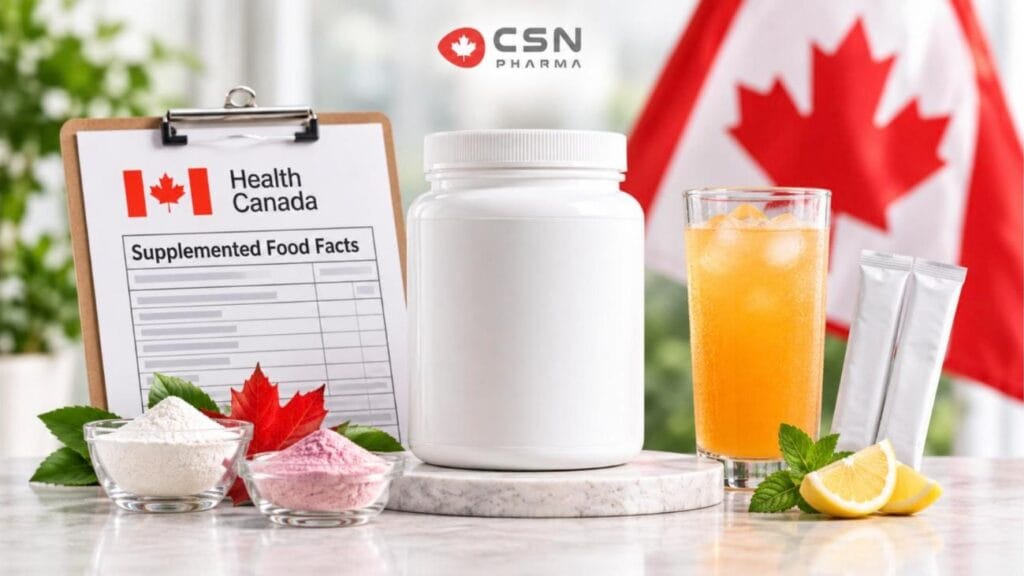
Labelling is another area to review before launching or transitioning an electrolyte product. Supplemented foods require a Supplemented Food Facts table. Depending on ingredients and quantities, some products may also need a supplemented food caution identifier and cautionary statements.
Brands should review:
- Ingredient information: Declarations must match the approved formulation.
- Supplemented Food Facts: Check the nutritional and supplemental ingredient information.
- Serving size: Serving details and preparation instructions must match the final formula.
- Cautionary statements: Confirm whether caution identifiers or statements are required.
- Packaging information: Review label space, bilingual requirements and other food labelling rules.
Marketing claims need the same attention. Product descriptions, websites, retailer listings, social media ads and promotional materials should all describe the product accurately. Claims from an older NHP listing should not be carried forward automatically into a new food product’s marketing.
How Regulatory Changes Affect Manufacturing
Regulatory changes reach beyond documentation. They can affect ingredient sourcing, formulation, testing, packaging and production schedules.
For businesses exploring electrolyte supplement manufacturing, coordinating these requirements early helps reduce delays and avoid unnecessary costs. Before commercial production, confirm:
- The intended regulatory classification.
- The approved product formulation.
- Ingredient specifications and sourcing.
- Required quality testing and documentation.
- Packaging and label approvals.
- Production timelines and responsibilities.
Manufacturers and brand owners should also agree on a clear approval process for formulation or packaging changes. A change in ingredient quantity, serving size or claims may need a fresh regulatory and label review. An organised process keeps production and marketing teams working from the same specifications.
If you are planning a first run, it also helps to understand how batch size affects your budget. See the real cost of small-batch supplement manufacturing.
Preparing Your Electrolyte Brand for the Canadian Market
Businesses planning sports electrolyte products in Canada should consider regulatory requirements from the first stage of development. Waiting until packaging or the formula is finalised can add costs if changes become necessary.
A practical approach is to work in stages:
- Product assessment: Define the target audience, intended use, format and proposed claims.
- Regulatory review: Establish the classification and assess ingredient suitability.
- Formulation development: Finalise ingredient specifications, serving size and flavour.
- Packaging and labelling: Review label requirements and approve artwork.
- Manufacturing preparation: Confirm testing, documentation, timelines and final approvals.
For existing NHP products, also review current licence details, packaging inventory and transition requirements. This structured approach helps businesses make informed decisions before committing to large production orders.
Have more questions about the transition? Visit our electrolyte regulations FAQs.
Plan Your Next Electrolyte Product with CSN Pharma
Launching an electrolyte product in Canada takes careful attention to formulation, classification, labelling and manufacturing. Whether you are developing a new sports electrolyte product or building a private label electrolyte brand in Canada, a clear product brief and manufacturing plan can streamline development.
CSN Pharma offers supplement product development and GMP-compliant manufacturing to help brands move from concept to production. Contact our team to discuss your electrolyte product requirements.
Is your brand reviewing an existing electrolyte NPN or launching a new product under the food framework? Share your biggest question about the transition below and our team will reply.