The Real Cost of Small-Batch Supplement Manufacturing: Understanding MOQs, Ingredients and Packaging
(by CSN Pharma — Canadian Health Canada–licensed, GMP- and SQF-certified supplement manufacturer)
The Real Cost of Small-Batch Supplement Manufacturing
Starting a supplement brand involves many financial decisions, and production quantity is one of the most important. Small-batch supplement manufacturing helps businesses manage their initial investment, test market demand and launch new products without committing to large volumes.
However, smaller runs usually cost more per unit. Setup, testing and development expenses are spread across fewer finished products.
The total investment typically covers ingredients, packaging, production, quality testing and formulation development. Understanding each one helps brands build realistic budgets and avoid surprises.
How Do Minimum Order Quantities (MOQs) Affect Costs?
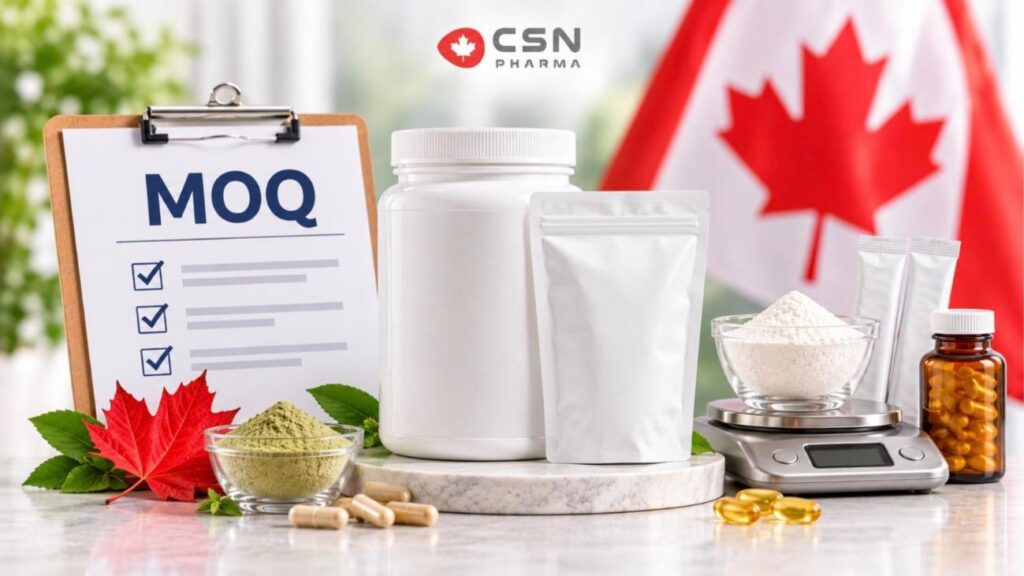
Minimum order quantities set the smallest volume a manufacturer can produce for a product or format. They vary with ingredients, equipment, packaging and production processes.
For example, CSN Pharma’s manufacturing enquiry information lists these minimums:
- Powder: 350 kg
- Capsules: 150,000 units
- Stick packs: 15,000 units per SKU
In-stock private label products may have different minimums. Always confirm current product-specific MOQs before preparing a budget.
When comparing a supplement contract manufacturer in Canada, ask whether minimums apply to the whole order, to each flavour or to each SKU. Also check raw material and packaging purchase minimums. Suppliers sometimes require larger ingredient or packaging orders than the first run needs, which ties up inventory and working capital.
Key Factors That Influence Manufacturing Costs
- Ingredients and raw materials: Vitamins, minerals, botanical extracts and specialised ingredients each carry different sourcing costs. Specifications, quality requirements, purchase quantities and supplier availability also affect price.
- Packaging: Costs depend on format, materials, printing and order quantities. Bottles, pouches and stick packs each have different procurement needs, and custom packaging can add setup or printing charges.
- Manufacturing and production: Equipment setup, labour, blending, filling, processing and cleaning. These vary by format and batch size.
- Testing and quality checks: Product release testing adds to the budget. Confirm which checks, specifications and documents are included in the quote.
- Product development: Formulation work, sampling, flavour development and artwork may add one-time costs that do not recur on later orders.
Understanding each component makes it easier to compare quotations on the same basis.
Small-Batch vs Large-Batch: The Cost Difference
Production quantity has a large effect on cost per unit. Consider this hypothetical comparison in Canadian dollars (CAD):
| Cost Component | 1,000 Units | 5,000 Units |
|---|---|---|
| Ingredients | $3,000 | $12,000 |
| Manufacturing | $1,500 | $4,000 |
| Packaging | $2,000 | $7,000 |
| Testing | $1,500 | $2,000 |
| Development | $2,000 | $2,000 |
| Total Cost | $10,000 | $27,000 |
| Cost Per Unit | $10.00 | $5.40 |
Note: These figures are hypothetical and only demonstrate the calculation. They do not represent CSN Pharma’s actual prices.
The larger run lowers the average cost per unit, but it needs an extra $17,000 upfront. That is why batch size should not be decided on unit price alone.
If expected sales are low, 5,000 units may be the wrong choice. Excess stock raises storage costs and creates shelf-life and cash-flow problems. The right quantity balances unit economics, market demand and available investment.
Why Packaging and Ingredients Matter
Packaging and ingredient choices affect both first-run costs and long-term profitability.
Powder supplements may need pouches, bottles, scoops, labels, seals and shipping cartons. Custom designs, printed packaging and multiple flavours all increase procurement commitments. Specialised ingredients can also mean higher costs, longer sourcing times and extra documentation.
When approaching a powder supplement manufacturer in Canada, ask for a detailed breakdown of ingredient specifications, packaging costs and purchase quantities. Ask what happens to unused raw materials or packaging after the first run, including who owns them and where they are stored.
For new brands, a focused first product range keeps manufacturing simpler and reduces separate packaging and ingredient commitments. Formats like electrolyte powders also need taste and mixing trials before scale-up; see why electrolyte powders fail on taste and solubility.
Don’t Overlook Testing and Repeat-Order Costs
Quality testing belongs in the project budget from the start. Before production, agree on the testing programme, specifications, documentation and batch release requirements with your manufacturer. CSN Pharma’s quality assurance process explains how this works in practice.
Brands should also separate first-order costs from repeat-order costs. A first run may include formulation, sampling and artwork. Repeat orders may skip some of these, but ingredients, packaging, manufacturing and testing still apply.
Ask for separate quotes for the first run and future orders to see long-term costs clearly. Also factor in freight, storage, duties and other supply-chain costs when calculating the full cost of bringing a product to market.
If you are launching an electrolyte product, regulatory changes can also affect your budget. Read Canada’s changing electrolyte regulations before finalising your formula.
Still have questions about MOQs or pricing? See our small-batch manufacturing FAQs.
Plan Your Supplement Manufacturing with CSN Pharma
Choosing the right production quantity is key to managing costs and building a sustainable supplement business. Understanding MOQs, ingredient sourcing, packaging and testing helps brands make better manufacturing decisions.
CSN Pharma offers custom supplement manufacturing and private label solutions for growing brands. Request a quote to discuss your product and production goals.
What is your biggest challenge with a first production run: MOQs, packaging costs or forecasting demand? Tell us below and our team will share practical tips.