Why Electrolyte Powders Fail on Taste and Solubility: What Brands Should Know
(by CSN Pharma — Canadian Health Canada–licensed, GMP- and SQF-certified supplement manufacturer)
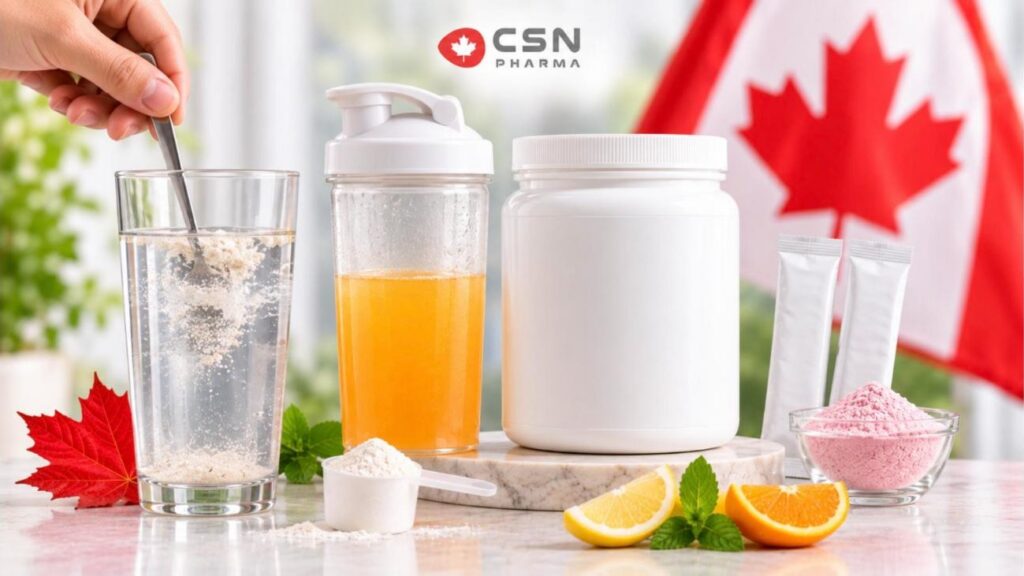
Why Electrolyte Powders Fail on Taste and Solubility
Developing an electrolyte powder takes more than choosing the right ingredients and meeting nutritional specifications. Taste, texture and solubility shape how customers experience the product.
Some electrolyte powders taste too salty or bitter, clump during mixing or leave residue at the bottom of a glass or shaker. These issues hurt customer satisfaction and repeat purchases.
A successful electrolyte powder formulation balances ingredient selection, flavour, serving size and mixing performance. A product that looks good as a dry powder can behave very differently in water, so brands should test the finished drink before commercial production.
Common Electrolyte Powder Formulation Challenges
Identifying the root cause helps the development team choose the right fix.
- Bitterness and excessive saltiness: Mineral ingredients and their concentrations shape the flavour profile. Sodium and some other mineral sources can add noticeable salty or bitter notes. The goal is a balanced taste without changing the intended specifications.
- Clumping during mixing: Some powders form floating lumps in water. Particle characteristics, moisture exposure, ingredient interactions and wetting behaviour all play a part, as can the mixing method.
- Sedimentation and visible residue: Some ingredients do not fully dissolve and settle after mixing. It helps to separate truly dissolved ingredients from particles that stay suspended briefly before settling.
- Caking during storage: Moisture exposure reduces powder flow and causes hard lumps in the pack. Packaging material, seal integrity and storage conditions all matter.
- Unpleasant aftertaste: Sweeteners, flavouring agents and minerals can interact and leave a lingering taste. An aftertaste that seems mild in one sip often becomes more noticeable across a full serving.
How to Improve Taste in an Electrolyte Powder
Taste improvements usually come from adjusting several small things together rather than one large change.
- Review mineral sources: Different salt forms of the same mineral can taste quite different. Comparing suitable options at the same target level can reduce bitterness.
- Balance the flavour system: Citrus, berry and tropical profiles often pair well with mineral notes. Acidity can brighten the drink and help balance saltiness.
- Adjust sweetness carefully: Too little sweetness exposes mineral notes, while too much can create its own aftertaste. Trial a few levels side by side.
- Check the serving size: The same formula can taste very different depending on how much water it is mixed with. Make the label instructions match the version that tested best.
Any change to ingredients or quantities should be checked against regulatory requirements. Our guide to Canada’s changing electrolyte regulations explains why this matters for sports electrolyte products.
How to Improve Solubility and Mixability
Solubility problems often come from how the powder is built and handled, not only from the ingredients.
- Particle size and blend uniformity: Very fine particles can float and clump, while coarse ones may sink. A consistent particle profile helps the powder wet and disperse evenly.
- Ingredient order and blending: How ingredients are combined during manufacturing can affect how evenly the finished powder dissolves.
- Flow and moisture control: Keeping humidity low during blending and filling helps the powder stay free-flowing.
- Real-world mix tests: Test with cold and room-temperature water, in a glass and a shaker bottle, and with the stirring a customer would actually do.
Packaging and Moisture Protection
Electrolyte powders are often sensitive to moisture, so packaging plays a direct role in product quality.
Single-serve stick packs limit air and moisture exposure each time a serving is used. Multi-serving pouches and bottles need good barrier materials and reliable closures, since they are opened many times.
When choosing packaging, consider barrier properties, seal strength, fill weight accuracy and how customers will store the product. Packaging format also affects minimum order quantities and costs. Read the real cost of small-batch supplement manufacturing to see how packaging choices influence your budget.
Common Mistakes to Avoid
Many taste and solubility problems come from decisions made too quickly early in development. Watch for these common mistakes:
- Approving a formula from dry powder alone: Always judge the finished drink, mixed exactly as the label instructs.
- Testing only small lab batches: Blending and filling at production scale can change how a powder flows and dissolves.
- Changing flavours late: A new flavour can alter sweetness balance, colour and mixing behaviour, so retest after every change.
- Ignoring storage conditions: A powder that mixes well on day one may cake after weeks in a warm, humid warehouse.
- Skipping customer feedback: Early feedback from your target audience can reveal issues the development team has grown used to.
Avoiding these mistakes keeps development on schedule and protects the product experience after launch.
Test Before You Scale
The most reliable way to avoid taste and solubility complaints is structured testing before full production.
- Bench samples: Compare several formula versions side by side using the customer’s preparation instructions.
- Taste panels: Gather feedback from people who match your target customer, not only the development team.
- Mixing trials: Record how quickly each sample dissolves and whether residue or foam forms.
- Storage checks: Store samples in the final packaging and recheck flow, appearance and taste over time.
- Pilot batch: Confirm the approved formula performs the same way at production scale.
Document the approved specifications, including taste, appearance and mixing behaviour. This gives future batches a clear standard to match and supports consistent quality assurance.
Have more questions about formulation? Visit our electrolyte powder FAQs.
Develop a Better Electrolyte Powder with CSN Pharma
Great electrolyte products combine the right formula with a drink customers enjoy and a powder that mixes easily. Addressing taste, solubility and packaging early saves time and avoids costly reformulation after launch.
As a powder supplement manufacturer in Canada, CSN Pharma supports brands through product development, sampling and production. Whether you are launching a private label electrolyte brand in Canada or improving an existing formula, contact our team to discuss your project.
Have you faced clumping, bitterness or residue in an electrolyte powder? Share what you have tried below and our formulation team will respond.