What Is an NPN? And Why Is It Important for NHP Brands in Canada?
(by CSN Pharma — Canadian Health Canada–licensed, GMP- and SQF-certified supplement manufacturer)
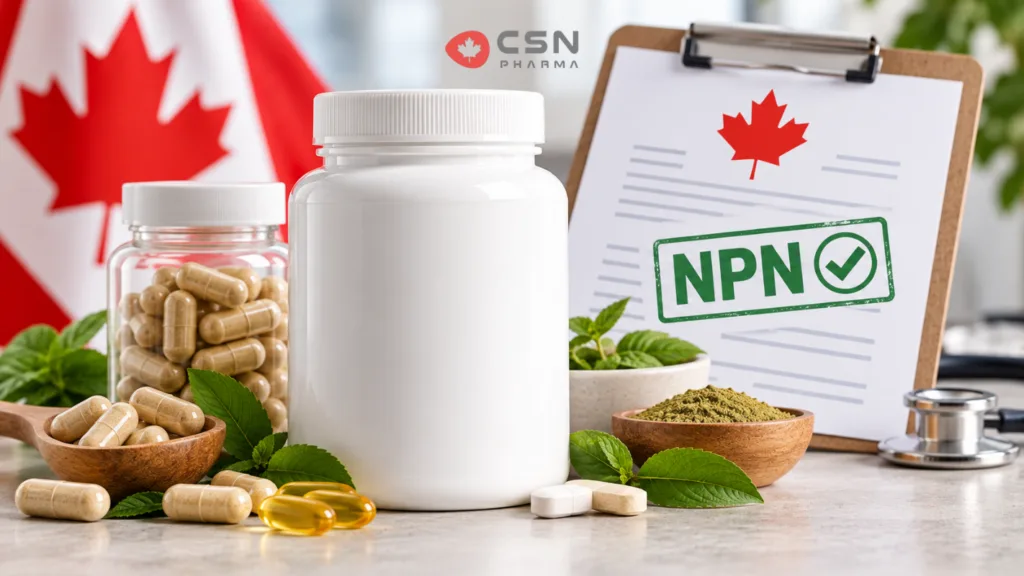
What Is an NPN (Natural Product Number)?
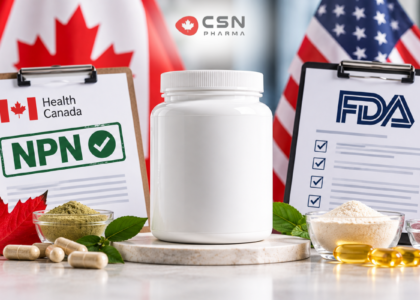
If you are navigating Canadian supplement compliance, NPN stands for Natural Product Number. It is a mandatory eight-digit identifier assigned to licensed natural health products.
Securing a Health Canada NHP license is a legal requirement; once your product is authorized for safety, efficacy, and quality, it is issued this NPN, which must be displayed clearly on your product label. For anyone asking what is an NPN designed to do, it serves as immediate proof to consumers and retailers that your product has been officially assessed and approved for sale within the Canadian regulatory framework.
Natural health products can include products such as:
- Vitamins and minerals
- Herbal and plant-based products
- Traditional medicines
- Probiotics
- Omega-3 and essential fatty acid products
- Certain sports nutrition and wellness supplements
Health Canada maintains a Licensed Natural Health Products Database (LNHPD) where consumers and businesses can search for licensed products using their NPN.
Why Do NHP Brands in Canada Need an NPN?
The Canadian regulatory system treats natural health products differently from conventional foods. NHPs marketed with specific health-related purposes are regulated under Canada’s natural health product framework.
According to Health Canada, all NHPs sold in Canada require a product licence before being marketed. The licensing process involves submitting information about the product, including its medicinal ingredients, source, potency, non-medicinal ingredients and recommended use.
Once Health Canada has assessed the application and granted authorization, the product receives an NPN.
What Does an NPN Tell Consumers?
An NPN provides consumers with a simple way to identify a licensed natural health product.
Health Canada states that an NPN indicates that the product has been authorized for sale in Canada and has been assessed for safety, efficacy and quality under its recommended conditions of use.
For consumers, this can provide greater confidence when comparing products on retail shelves or online.
For brands, it can also support credibility by demonstrating that the product has gone through the applicable Canadian regulatory process.
What Does Health Canada Review Before Issuing an NPN?
Obtaining an NPN involves more than submitting a product name.
A product licence application can require detailed information about the product, including:
- Medicinal ingredients
- Ingredient sources
- Potency
- Non-medicinal ingredients
- Recommended use
- Dosage and conditions of use
- Supporting evidence for the proposed claims
Health Canada evaluates the submitted information as part of the product-licensing process. Products that receive authorization are issued an NPN, which must appear on the label.
This is why regulatory planning should ideally begin before formulation, packaging and marketing materials are finalized.
NPN vs. DIN-HM: What’s the Difference?
You may also see DIN-HM associated with natural health products.
An NPN is assigned to natural health products, while a DIN-HM is an eight-digit number assigned to homeopathic medicines authorized under the Natural Health Products Regulations.
For most supplement and NHP brands, the number you will be concerned with is the NPN.
Why Is an NPN Important for Private Label Supplement Brands?
For entrepreneurs launching a private label supplement brand, regulatory compliance can have a major impact on launch timelines and costs.
An NPN should therefore be considered early in the product-development process.
For example, a brand may need to consider: Product concept → Formula → Regulatory assessment → Licensing → Label development → Manufacturing → Launch.
The exact process can vary depending on the product, formulation, claims and regulatory pathway.
If you are considering private label, our guide on How to Launch a Private Label/White Label Supplement Brand in Canada provides a broader overview of the Canadian launch process.
5 Reasons an NPN Matters for NHP Brands
- It Supports Legal Market Access: The most important reason is straightforward: NHPs sold in Canada require a product licence. An NPN is the eight-digit identifier associated with that licence. Health Canada states that NHPs require product licensing before they are marketed in Canada. For a brand planning to sell in Canada, regulatory authorization needs to be part of the launch strategy—not an afterthought.
- It Builds Consumer Confidence: Today’s supplement consumers increasingly want to know what they are purchasing. An NPN gives consumers a way to verify that a product is licensed through Health Canada’s database. This can be particularly valuable for new brands trying to establish credibility in a competitive market.
- It Helps Keep Product Claims Aligned With the Authorized Product: NHP brands cannot simply make any health claim they want. The product’s recommended use and claims are part of the information assessed during licensing. This means brands should make sure their packaging, website, advertising and other marketing communications remain aligned with the product’s authorized conditions of use.
- It Supports Retail and E-commerce Expansion: As a brand grows, it may move from its own website into marketplaces, retailers and other distribution channels. Having the appropriate Canadian product authorization in place can make regulatory documentation an important part of the expansion process. Brands should plan their compliance documentation early rather than waiting until a retailer or marketplace requests it.
- It Creates a Stronger Foundation for Brand Growth: An NPN isn’t a substitute for good manufacturing, quality control or effective branding. However, it forms an important part of the regulatory foundation behind a Canadian NHP. For growing brands, this foundation becomes increasingly important as product portfolios, distribution channels and customer expectations expand.
What Happens If an NHP Doesn’t Have an NPN?
If a product requires an NPN but does not have the appropriate product licence, it should not simply be marketed in Canada as though it were an approved NHP.
Health Canada advises consumers to look for an NPN or DIN-HM to identify licensed products.
For brands, attempting to launch before the necessary authorization is in place can create compliance risks, delays and additional costs.
This is one reason regulatory planning should happen alongside product development rather than after manufacturing and packaging are complete.
How Can Brands Check an Existing NPN?
If you are working with an existing formulation or private label product, you can verify licensed products through Health Canada’s Licensed Natural Health Products Database.
The database contains information about natural health products that have received a product licence, including vitamins, minerals, herbal products, traditional medicines and other NHP categories.
Check Health Canada’s Licensed Natural Health Products Database. This is particularly useful when evaluating an existing private label formulation or checking the regulatory status of a product already available in the Canadian market.
NPN and Private Label: What Should Brands Know?
Private label can offer a faster route to market because brands may be able to work with established formulations rather than developing every product from scratch.
However, brands should understand exactly what regulatory authorization applies to the product and how the NPN is associated with the product and licence holder.
Before selecting a private label product, ask your manufacturing partner:
- Does the product already have an NPN?
- Who is the current licence holder?
- What formulation is associated with the NPN?
- What claims and recommended uses are authorized?
- Does the formulation match the product you intend to sell?
- What regulatory documentation is available?
- What changes would require regulatory review or an amendment?
These questions can help prevent costly surprises later in the launch process. You can also read our guide on how to select the best private label supplement manufacturer before choosing a manufacturing partner.
NPN Is Only One Part of Compliance
While the NPN is extremely important, having an NPN does not mean a brand can ignore other Canadian regulatory requirements.
Brands also need to consider areas such as: Product formulation, Ingredient compliance, Label requirements, Bilingual labelling, Approved claims, Manufacturing practices, Quality control, Packaging, Advertising and marketing communications.
Health Canada notes that licensed NHPs must carry detailed label information to help consumers make safe and informed choices.
This is why working with an experienced Canadian supplement manufacturing and product-development partner can be valuable.
If you are developing a new formula, CSN Pharma’s product development services support brands from concept and formulation through product development and shelf-ready production.
How CSN Pharma Can Help NHP Brands
Launching an NHP brand in Canada involves more than manufacturing capsules, powders or other supplement formats.
You need to consider formulation, quality, regulatory requirements, packaging and production as one connected process.
CSN Pharma provides product development, private label and supplement manufacturing services for brands developing products for the Canadian market. The company’s resources also cover private label launches, manufacturing and supplement-industry strategy.
For brands exploring private label or custom formulation, the right manufacturing partner can help make the path from product concept to market more structured and efficient.
Final Thoughts
An NPN is an eight-digit Natural Product Number issued in connection with Health Canada’s product licensing system for natural health products.
For NHP brands in Canada, it is important because it represents the product’s authorization for sale and provides consumers and businesses with a way to identify licensed products.
If you are planning to launch a supplement brand in Canada, don’t treat the NPN as something to think about after the product is manufactured. Consider regulatory requirements from the beginning—when selecting ingredients, developing your formula, determining claims, designing packaging and choosing your manufacturing partner.
Building a successful Canadian NHP brand starts with getting the regulatory foundation right.